

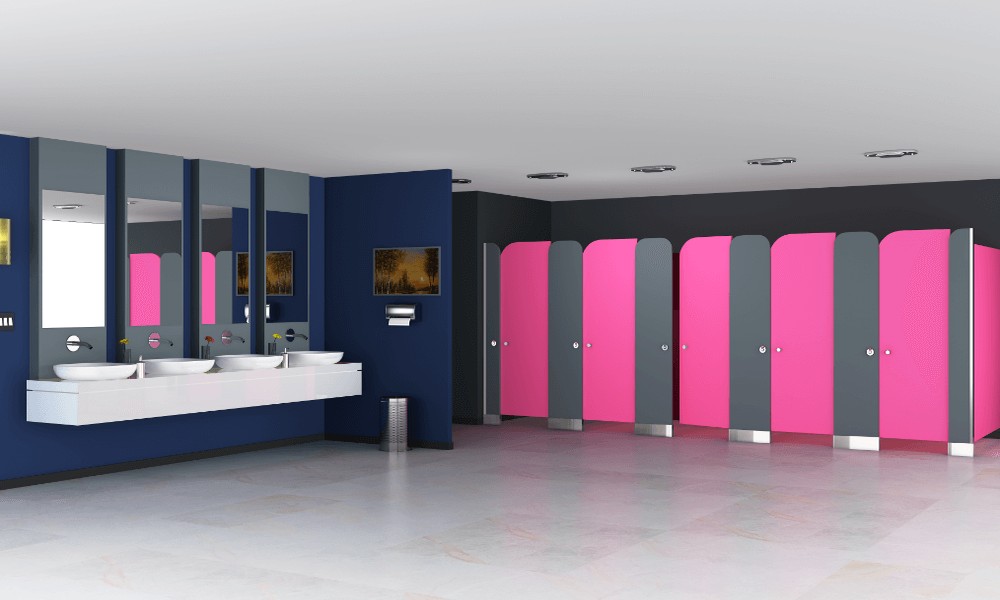
Partition material selection in high-moisture restroom environments determines whether a partition system lasts 10 years or 30. The performance gap between materials widens significantly in pool facilities, coastal buildings, and commercial kitchens where humidity exceeds the design assumptions of standard catalog specifications.
Why Does Powder-Coated Steel Fail in Humid Restrooms?
Powder-coated steel partitions are the most widely specified material in standard commercial applications. In low-humidity interiors, they perform adequately for 15 to 20 years with standard maintenance.
In high-moisture environments, 2 failure modes initiate within 2 to 5 years:
- Edge corrosion at cuts and fastener penetrations where the powder coat does not provide full coverage
- Moisture migration beneath the coating once an edge is compromised, producing visible rust across the face panel within 12 to 18 months
When Should Specifiers Choose Solid Plastic or Phenolic?
High-density polyethylene solid plastic partitions are non-porous and inherently moisture-resistant, making them the standard specification for pool facilities, locker rooms, and coastal buildings.
Phenolic partitions, constructed from resin-impregnated kraft paper compressed under high heat, offer 3 advantages over solid plastic in school and university applications:
- Greater surface hardness and scratch resistance
- Wider range of colors and surface textures
- Better rigidity in large panel formats
What Is the Appropriate Specification for Stainless Steel Partitions?
Type 304 stainless steel partitions provide the highest corrosion resistance available in standard partition specifications. They are the preferred material for 3 application types:
- Food processing facilities with direct water and chemical exposure
- Pharmaceutical manufacturing environments with regulatory surface requirements
- Healthcare restrooms where surface integrity and cleanability are subject to inspection
What Technical Data Should Specifiers Request Before Selecting a Material?
Specifiers selecting commercial toilet partitions for high-moisture applications should request 4 types of documentation from shortlisted manufacturers:
- Water absorption ratings for the panel material at standard test conditions
- Edge treatment specifications showing coverage method at cut edges and fastener penetrations
- Fastener material compatibility documentation confirming corrosion resistance at connection points
- Cleaning chemical compatibility data for disinfectants used in the facility’s janitorial program
What Is the Recommended Specification by Facility Type?
Material recommendations by application type:
- Aquatic and pool facilities: solid plastic or stainless steel
- K-12 and university restrooms: phenolic or solid plastic
- Standard office and retail: powder-coated steel, with phenolic upgrade in coastal climates
- Healthcare and pharmaceutical: stainless steel or phenolic depending on regulatory requirements
