

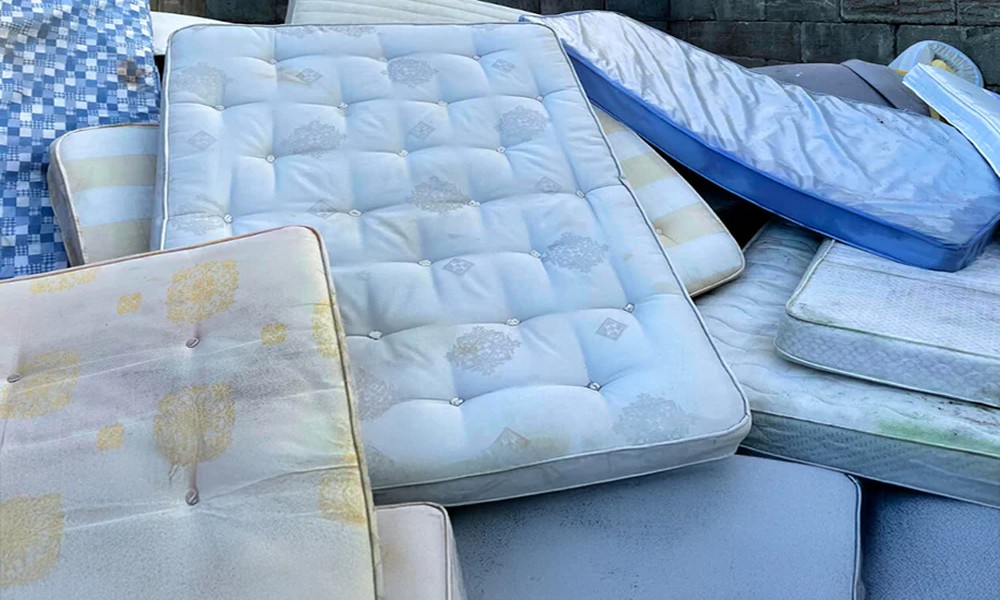
Mattresses don’t just disappear when they’re tossed to the curb. In dense cities, these bulky items pile up rapidly, overwhelming landfills and stretching waste management systems to their limits. Cities from Montreal to Paris face a common challenge: how to efficiently collect, process, and recycle a seemingly endless flow of old mattresses.
The Scale and Urgency of Mattress Waste in Urban Environments
Quantifying Mattress Disposal in Large Cities
Each year, urban centers discard staggering numbers of mattresses. Between Quebec and Ontario alone, over 400,000 mattresses are recycled annually, while France handles more than one million. These figures only scratch the surface, with many more ending up in landfills or incinerators due to limited recycling infrastructure.
Environmental Consequences of Landfilling Mattresses
Mattresses are notoriously stubborn landfill guests. Their size and springy construction waste valuable space and create pockets that can cause landfill instability. Worse, the synthetic materials and foams used in modern mattresses leach toxic chemicals and linger for decades, polluting soil and water. Effective recycling diverts these hazards, dramatically reducing the environmental toll.
Regulatory Pressures and Urban Waste Management Challenges
Governments are responding with tighter regulations and landfill bans on bulky waste, including mattresses. Cities must now solve logistical puzzles, balancing growing volumes with finite collection budgets, all while meeting ambitious sustainability targets. The pressure is on for innovative, scalable recycling solutions.
Key Components of an Effective Mattress Recycling System
Collection and Transportation Logistics in Dense Urban Areas
Efficiency starts at the curb. Urban populations demand convenient collection, whether through curbside pickup, drop-off depots, or scheduled bulk waste services. Optimized routing and compacting trucks are essential to minimize congestion and emissions during transportation, especially when navigating busy city streets.
Advanced Sorting and Material Recovery Techniques
Once collected, mattresses undergo triage. Skilled workers or automated systems separate springs, foam, textiles, and wood. The goal is maximum material recovery with minimal contamination, enabling these components to be repurposed into new products, insulation, or even energy feedstocks.
Innovative Technologies in Mattress Deconstruction
Modern recycling plants leverage shredders, air separation, and magnet-based sorting. Some facilities use robotics to enhance speed and worker safety, while others pioneer chemical processes to break down polyurethane foams more efficiently. Innovation in this stage boosts recovery rates and reduces residual landfill waste.
Ensuring Safety and Hygiene Throughout the Process
Urban recycling systems must navigate health risks. Bedbugs, mold, or hazardous fillings can lurk within discarded mattresses. Strict protocols for inspection, quarantine, and sanitization are non-negotiable to protect both workers and the public.
Economic and Social Dimensions of Mattress Recycling
Creating Viable Business Models for Urban Recycling Programs
Profitability is a major hurdle. The economics hinge on processing fees, resale of recovered materials, and sometimes government subsidies. Programs that scale successfully often blend private investment with public support, ensuring both sustainability and accessibility.
Job Creation and Community Engagement Opportunities
Mattress recycling is surprisingly labor-intensive, offering valuable opportunities for local job creation, especially in entry-level or transitional roles. Community education campaigns drive participation and reduce illegal dumping, amplifying system effectiveness.
Partnerships Between Municipalities, Private Sector, and NGOs
No single actor can shoulder the entire burden. The most effective systems cultivate tight partnerships, aligning city programs with commercial recyclers and advocacy organizations. For instance, the Recyc-Matelas mattress removal service operates in partnership with municipalities, exemplifying the benefits of collaborative models.
Case Studies: Successful Mattress Recycling Systems in Urban Regions
Recyc-Matelas Model Between Quebec and Ontario
Recyc-Matelas demonstrates how targeted infrastructure and local partnerships can process hundreds of thousands of mattresses yearly, diverting significant waste from Canadian landfills. Their approach integrates collection logistics with specialized deconstruction facilities, offering a blueprint for other urban regions.
France’s Approach to Recycling Over One Million Mattresses Annually
France’s system builds on extended producer responsibility, requiring manufacturers to fund recycling programs. This national-scale coordination, coupled with accessible drop-off points, makes it easy for urban residents to recycle, pushing recovery rates sky-high.
Lessons Learned from Other Global Metropolitan Initiatives
Cities like San Francisco and Melbourne are piloting mattress deconstruction robots, while London focuses on community-driven recycling incentives. The common denominator? Flexibility and robust infrastructure tailored to local needs.
Overcoming Barriers to Implementation and Scaling
Addressing Consumer Awareness and Participation
Even the most advanced system falters if residents are unaware or unwilling to participate. Education, clear guidelines, and visible benefits are crucial to drive engagement.
Infrastructure Limitations and Funding Challenges
Many cities lack dedicated recycling centers or must retrofit existing facilities. Start-up costs can be steep, but long-term environmental and social payoffs justify the investment.
Navigating Legislative and Policy Frameworks
Regulatory clarity and support are essential. Harmonized policies reduce confusion, encourage innovation, and ensure that mattress recycling is both practical and legally enforceable.
Future Outlook: Innovations and Sustainability Goals
Emerging Technologies to Improve Efficiency and Output Quality
Robotics, AI-powered sorting, and chemical foam recycling hold promise for faster, cleaner, and higher-yield mattress recycling in the years ahead.
Integrating Mattress Recycling Into Circular Economy Strategies
A closed-loop approach sees mattress materials reborn as new products, slashing resource consumption and reinforcing urban sustainability goals.
Long-Term Environmental and Economic Benefits for Cities
The payoff is twofold: cleaner cities and greener economies. Effective mattress recycling systems not only preserve landfill space and reduce pollution but also create jobs and foster social equity. As urban populations grow, these systems become not just beneficial, but essential.
