

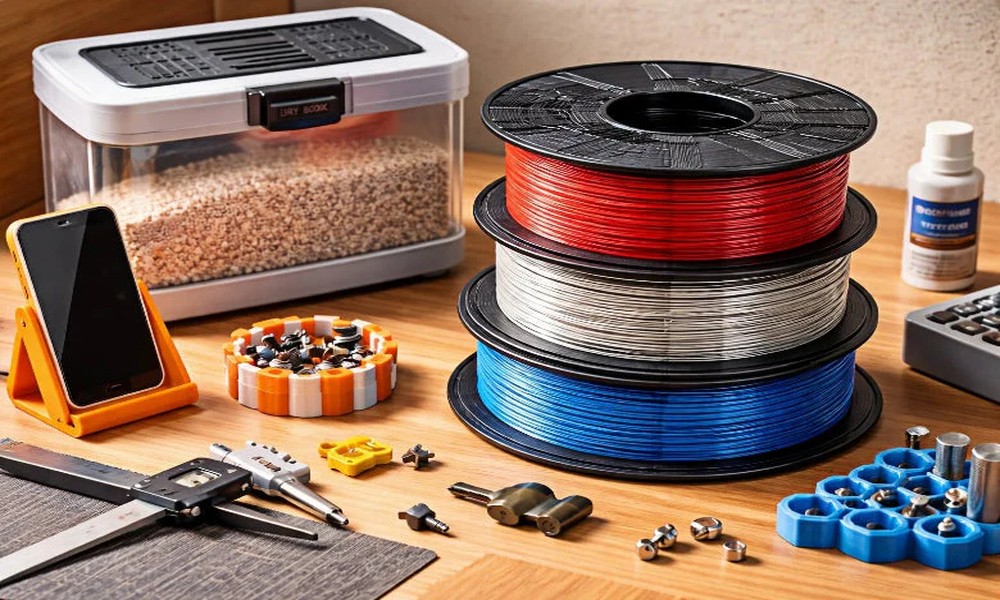
For desktop printers, PETG filament for 3D printing is a plastic material that makes durable and functional 3D prints. It is in the middle of the strength and printability of PLA and ABS. It’s often used for parts that don’t prone to easy breakage but also don’t take a lot of effort to print.
This material is composed of PET and glycol. This modification contributes to the smoother filament flow through the nozzle and reduces the risk of cracking. It is also effective in PETG filament for 3D printing, and it helps in the smooth layer formation and good adhesion of the 3D-printed parts while maintaining their normal durability.
It is frequently utilized in domestic projects, fixings and small scale manufacturing where parts must be firm throughout their lifespan.
Performance in a printer
If the parameters are set properly, PETG will print in a consistent manner when printing begins. Smooths out and adheres to majority of print bed surfaces. This will minimize lifting at corners and can spoil prints early on.
With PETG filament for 3D printing, the flow through the nozzle is usually smooth. Bond between the layers is strong, resulting in printed items having a solid feel. It may also generate thin strings between components, which can be minimized by tweaking the temperature and retraction parameters.
The temperature of the bed is also important. The first layer should be held in place by a warm bed, and cooling fans should be used in balance. Excessive cooling will result in a weaker layer, and insufficient cooling will impact detail. After tuning, the print process is consistent and repeatable.
Common uses in Daily Projects
There are various types of prints that use PETG. It is often used for products that require some strength but not the same level of strength as a full industrial grade plastic. They’re the storage boxes, clips, brackets, and covers.
In many instances 3D printed filament made from PETG is used for exterior parts due to its tolerance to sunlight and moisture. It is useful for garden tools, sensor covers and protective cases.
It is popular among hobbyists for models that are used extensively. Does not bend easily, suitable for parts in prolonged use. It is also employed in small workshops to produce short runs where repeatable quality is required.
Getting Better Print Results
Small adjustments can sometimes be significant for good results with PETG, but not so much large adjustments. A clean Print Bed will help the first layer adhere. It is helpful to keep the surface clean as even small dust or grease marks can have an impact on the adhesion.
Dry storage is also important. PETG can be hygroscopic and will take up moisture from the air, causing rough surface or popping during printing. This is improved by storing 3D printing PETG filament in a storage box and helps maintain the smoothness of prints.
The temperature of the settings should be checked in small increments. Different printers have different characteristics, so establishing a consistent range will help achieve better surface finish and layer strength. Printing at slower speeds may also yield more detail in more intricate shapes.
The use of PETG remains practical and here is the reason.
PETG is a popular material choice due to its strength and ease of use. It is not as soft as PLA is, nor as difficult to print as ABS is, making it a compromise choice for many projects.
In time, the PETG filament for 3D printing has emerged as a popular choice among those seeking durable parts without the hassle of intricate printing procedures. Suitable for use at home and in small workshops.
With proper printing, it creates parts that remain solid, that can sustain small stresses, and that maintain their shape for a long time.
