

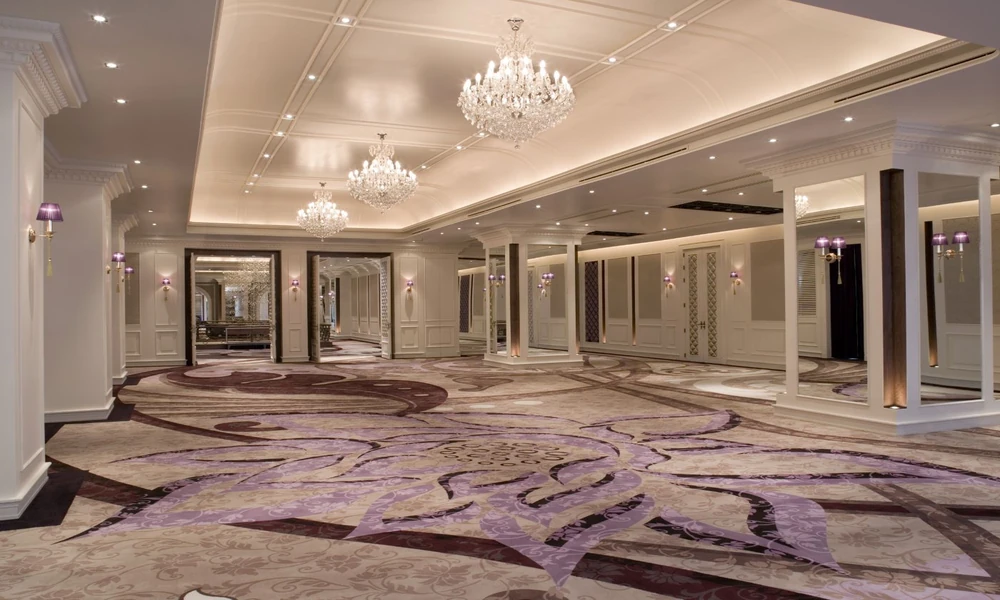
A luxury property is judged on its weakest moment rather than its best one. The suite can be immaculate and the service flawless, but if a keynote speaker cannot be heard from the back of the ballroom, that is the part the room remembers.
Audiovisual work is invisible when it goes well, which is exactly why it tends to get underestimated. It is also one of the few areas where a single failure is witnessed simultaneously by every guest in the building.
Setting the Tone Before Anyone Speaks
Guests form an impression of an event within moments of walking through the door.
A room already lit properly, with music at a level that invites conversation instead of competing with it, tells attendees that someone thought about them before they arrived. A room where a technician is still coiling cable while a projector throws a blue screen says something else entirely.
That first impression carries further than it should. Attendees who feel an event is well run extend the same judgment to the catering and to the property itself, usually without noticing they are doing it.
Getting the Audio Right First
Sound is the one element nobody forgives.
Intelligibility matters more than volume. Hotel ballrooms are difficult acoustic spaces, full of hard surfaces and long reflections, and simply pushing more power into a bad room makes the problem worse rather than better. Thoughtful speaker placement and even coverage across the entire seating area are what let a presenter be understood without anyone straining.
Wireless microphones bring their own complication. Crowded radio environments in large properties, where several events may run at once, call for frequency coordination that nobody thinks about until a microphone cuts out mid-sentence.
For a wedding the stakes are different but no smaller. Vows that guests strain to hear are vows they will remember straining to hear.
Choosing a Partner Rather Than a Vendor
The gap between a resident AV team and an outside crew wheeling gear in on the morning of an event is enormous.
A resident team learns the building. They know which ballroom has rigging points and where, how power is distributed, where sightlines break down, and what the property’s brand standards genuinely require.
Ownership structure matters more than most hoteliers expect. Providers such as Five Star AV, an independently owned company serving luxury hotels and resorts in markets including Orlando, Miami, Nashville, and Los Angeles, are not quietly steering recommendations toward a parent corporation’s inventory, and that independence tends to show up in what gets proposed and at what price.
Continuity of staffing is the quieter benefit. A technician who has run that room countless times does not need a briefing.
Lighting the Room With Intention
Lighting is where a competent event becomes a memorable one.
Uplighting transforms the character of an otherwise plain ballroom, and pin-spotting draws the eye toward centerpieces the client spent real money on. Stage lighting makes sure faces read properly instead of falling into shadow, which matters enormously the moment anyone lifts a phone to record.
Color temperature deserves attention as well. Warm light flatters a room and the people standing in it, while cool light drains both, and that gap is often the difference between photographs a couple treasures and photographs they quietly never post.
Planning for the Moment Something Fails
Equipment fails eventually. Good production simply assumes it will.
Redundancy is what separates professional work from merely adequate work. A backup for the presentation feed, spare microphones tested and waiting, a technician stationed inside the room rather than reachable by radio, and direct communication with whoever is running the program all cost something, and every one of them earns it back the first time it is needed.
Rehearsal handles the rest. Running a program before guests arrive surfaces the problems that would otherwise surface in front of an audience, which is the only place they truly cannot be fixed.
None of this shows up on a guest survey in so many words. It arrives instead as a remark that the event simply went well, which is the highest compliment this work is ever paid.
