

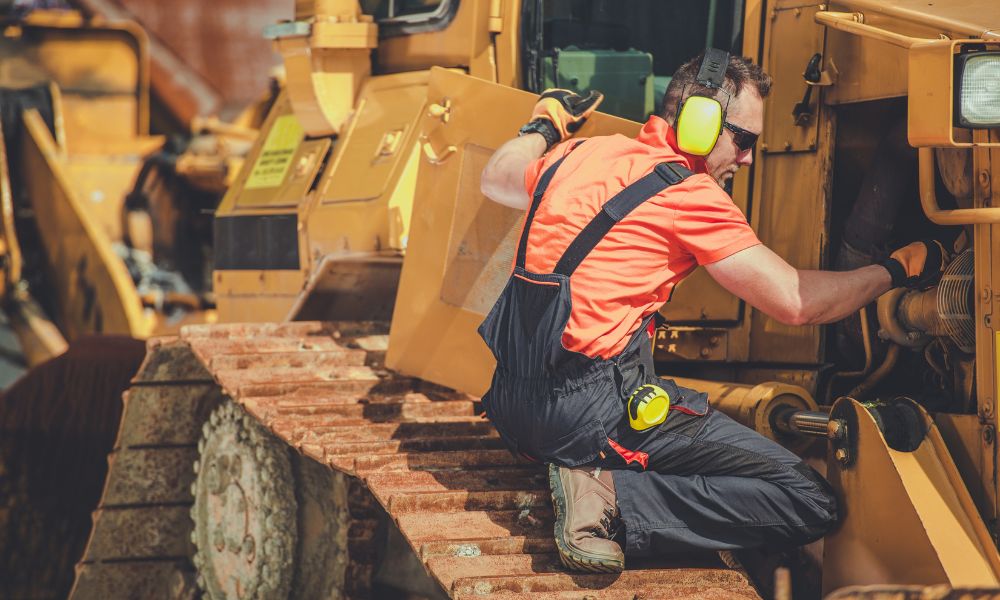
Whoever is working with or around machinery, requirements need to be adjusted to possible risks at every stage. As machines persist in becoming more modern and complex, we must also keep up to date on new enhancements in manufacturing 4.0 and how to safeguard ourselves. For this reason, you should ensure that all your coworkers are familiar with machine protection regulations, and clasp usual training conferences to upgrade and strengthen them. Understanding liability risks in equipment operations is also essential for businesses aiming to maintain workplace safety, reduce legal exposure, and ensure compliance with industry regulations.
The following are our main ten machine protection regulations.
1. Handle machinery only when protection is appropriately situated and altered.
There are many instructions and guidelines controlling machine safety, and the implementation of real protection. Where machine engineers are disturbed, it’s the authority of a business proprietor to maintain these, and also to make sure that all workers who are employed on or around machines do so in absolute protection. Machine operators should be aware of the required machine protection and how to inform if there’s any issue with it. Instruction programmes should highlight that all lawfully needed precautions must be correctly installed and adapted before the appliance can function.
2. Never detach the machine protection or try to get around it.
It’s very alluring for a machine mechanic to detach an annoying protection or attempt to detour it, if it’s stopping them from getting on with the work. This is one of the riskiest things to do with machinery; hence, the protection is clearly there for a reason and should not be taken out on any version.
3. Do not utilize a machine with protection that is uncertified or damaged.
It’s also practical that unofficial precautions may have been placed that don’t align with existing rules. Machinery should not be managed in such situations, or where the correct authorized protection in an impaired condition.
4. If you find out a machine protection issue, announce it then and there to your manager.
Machine mechanics must then, and there, describe or report any protection failures to a manager, who is in charge of solving any safety problems. Only when all the issues have been solved may the operation of the machinery be continued.
5. Slick machine sides wherever practical without erasing the protection.
Certain machines can be obtained for slick purposes without erasing their protection, through an oil supply that may be detected outside the shield. If allowance is not feasible with the protection still on, the machine must initially be turned off and bolted out before the protection is removed.
6. Erase protection defense only after appliance sit-out/categorization.
If the protection needs to be erased for some cause, such as preservation or renewal, this must only be done after the sit-out, categorization, or separation of the appliance. This appeals also to all machine preservation, whether scheduled or responsive.
