

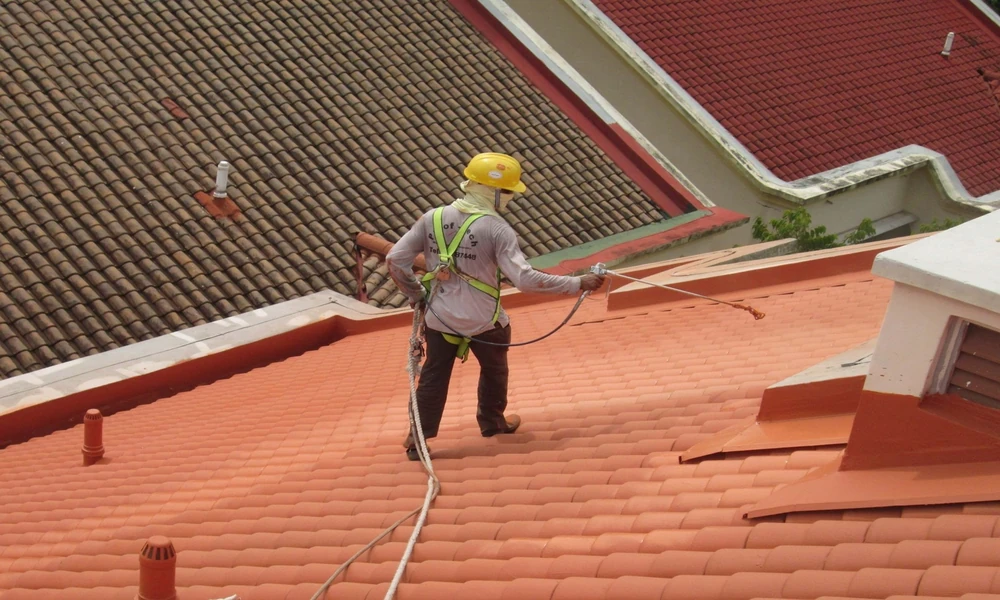
A roof leakage repair contractor in Singapore operates in one of the most demanding environments for waterproofing in the world. Singapore receives roughly 2,350 millimetres of rainfall annually, distributed across the year with no true dry season. Roofing systems here must withstand constant exposure to UV radiation, thermal cycling between the ambient outdoor heat and the cool of air-conditioned interiors, and the sustained hydrostatic pressure of heavy monsoon rainfall. When a roof or waterproofing system fails under these conditions, the consequences move quickly from inconvenience to serious building damage.
Why Roof Leakage Happens in Singapore
The causes of roof leakage in Singapore tend to fall into a predictable set of categories, each with its own repair requirements.
Membrane deterioration is the most common cause in flat-roof systems. Bituminous membranes, torch-on systems, and liquid-applied membranes all have a finite service life, typically between 10 and 20 years depending on the system type, application quality, and maintenance history. As the membrane ages, it becomes brittle, develops micro-cracks, and eventually loses its ability to resist water infiltration.
Joint and termination failures occur where the membrane meets vertical elements such as parapet walls, pipes, skylights, and service penetrations. These termination details are the most vulnerable points in any waterproofing system and require flexible, properly applied sealants and flashing. When these details fail, water tracks behind the membrane and into the structure.
Drainage blockages create ponding water that eventually finds every weakness in the membrane. A roof system that drains effectively within minutes of rain stopping can tolerate minor membrane imperfections that a continuously ponded system cannot.
Impact and mechanical damage from maintenance work, foot traffic, or falling debris can create immediate breaches in a membrane that was otherwise performing well.
The Diagnostic Process
Identifying the source of a leak is the critical first step, and it is not always as straightforward as it appears. In Singapore’s multi-storey residential and commercial buildings, water that appears on a ceiling below the roof may have entered the structure at a point some distance away, tracked along structural elements, and pooled where the path of least resistance allows it to exit.
A competent roof leakage repair contractor in Singapore will not simply apply a patch where the water is visible. They will systematically trace the leak to its source, which may involve water testing at specific points, thermal imaging to identify wet areas within the structure, or a methodical inspection of all potential entry points above the visible damage.
As BCA’s guidance on building maintenance notes, “Roof waterproofing failures diagnosed and repaired at source are significantly less likely to recur than those treated at the point of visible damage only.” This principle drives the approach that experienced contractors apply.
Repair Options
The appropriate repair method depends on the diagnosis:
- Targeted membrane patching addresses localised failures where the surrounding membrane is still sound. The failed area is cut out, the substrate is prepared, and a compatible patch membrane is bonded and sealed.
- Full membrane replacement is required when the membrane has reached the end of its service life or when the extent of failure is too widespread for targeted repairs to be durable.
- Injection grouting addresses concrete cracks and voids that are allowing water to bypass the membrane system.
- Joint re-sealing and flashing replacement addresses termination detail failures at parapets, pipes, and penetrations.
- Improved drainage corrects ponding that is accelerating membrane deterioration, sometimes requiring regrading the roof surface or adding drainage points.
Choosing the Right Contractor
Reliable roof leakage repair in Singapore requires a contractor with demonstrated diagnostic capability, not just patching experience. Several indicators distinguish capable contractors from those who apply surface treatments and hope for the best.
- Warranty provision: A contractor confident in their diagnosis and repair quality will provide a meaningful warranty on the work. Short warranties or warranties with extensive exclusions suggest limited confidence in the outcome.
- Systematic diagnosis: The contractor should explain clearly what the source of the leak is and why, not simply point at the visible wet patch and propose a coating.
- Written specification: The repair method, materials, preparation requirements, and expected outcomes should be specified in writing before work begins.
Maintenance After Repair
A repaired roof requires ongoing maintenance to achieve its full service life. Annual inspections, prompt clearance of drainage points after major weather events, and immediate attention to any new signs of water ingress are the habits that make the difference between a repair that lasts a decade and one that requires revisiting within two years.
Choosing the right roof leakage repair contractor in Singapore is the most important single decision in this process. Get the diagnosis right, use the appropriate repair method, and maintain the result – those three steps are the complete framework for managing roof leakage effectively in Singapore’s demanding climate.
